
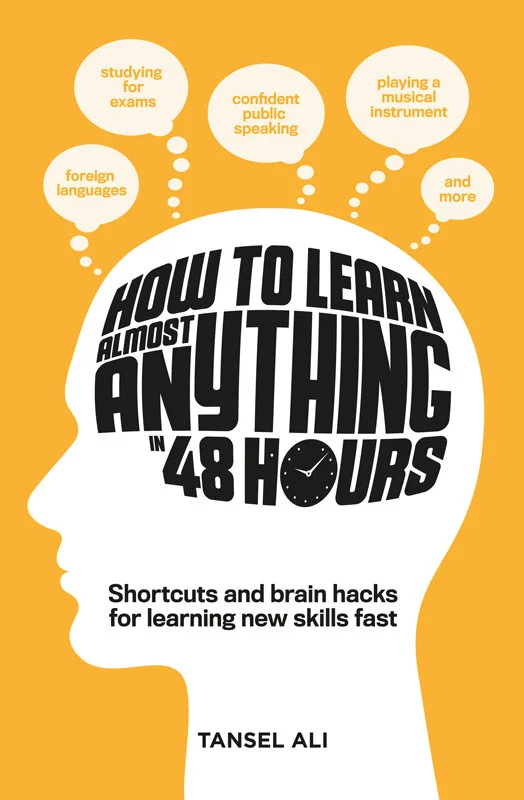
How to Learn Anything in 48 Hours
Learning quickly is not about shortcuts, hacks, or raw talent.
It is about removing friction so the brain can enter a state where absorption, retention, and application happen naturally. Most people assume learning takes time because progress feels slow, but in reality, learning feels slow when effort is scattered and goals are undefined.
When learning lacks structure, the brain spends more energy deciding what to focus on than actually learning. This creates fatigue, hesitation, and the illusion that progress requires months rather than days.
Fast learning is not about speed. It is about clarity.
Why Forty-Eight Hours Is Enough to Create Momentum
The brain does not need mastery to stay engaged. It needs evidence of progress.
Momentum forms when the brain experiences early wins. Once that happens, motivation increases automatically because effort starts producing results. Forty-eight hours is enough to trigger this shift when learning is structured correctly.
This time frame works because it limits overthinking. It prevents endless preparation and forces action. Instead of asking whether something will work, the learner begins testing and adjusting in real time.
The goal is not expertise. The goal is traction.
Why Preparation Comes Before Motivation
Most people wait to feel motivated before they prepare.
The brain works in the opposite order. When tools, resources, and access are already in place, action feels easier and resistance drops. When they are not, even simple tasks feel heavy.
This is why learning often stalls before it begins. Not because of laziness, but because the environment has not been set up to support action.
Preparation reduces friction. Reduced friction increases follow-through.
Why Clear Outcomes Compress Learning Time
Vague goals slow learning dramatically.
When the brain does not know what success looks like, it treats all information as equally important. Attention fragments, focus weakens, and progress feels scattered. Learning French, coding, or guitar becomes overwhelming because there is no filter.
Clear outcomes act as a compression tool. They tell the brain what to prioritise and what to ignore. This reduces cognitive load and accelerates absorption.
Learning speeds up when the brain knows exactly what it is aiming for.
Why Structure Prevents Cognitive Overload
Information without structure overwhelms working memory.
When material is unorganised, the brain cannot form clean pathways. Everything competes for attention, which leads to fatigue and inconsistent recall. This is often mistaken for poor ability when it is actually poor sequencing.
Structure creates hierarchy. It separates essential material from secondary content and gives the brain a clear path forward. Instead of juggling everything at once, attention moves step by step.
Progress feels faster because mental effort is no longer wasted.
Why Accountability Changes Behaviour Immediately
Learning in isolation makes delay easy.
When someone else expects progress, behaviour changes. Accountability introduces consequence, even when it is subtle. Effort becomes more consistent, not because motivation improves, but because commitment feels real.
The brain responds to expectation. Knowing that progress will be seen or checked increases focus and reduces procrastination.
This is why accountability accelerates learning without increasing study time.
Why Memory Techniques Reduce Relearning
Learning feels slow when information has to be relearned repeatedly.
Efficient learners do not repeat more. They encode better. When information is turned into images, associations, or structured sequences, it becomes easier to retrieve. This reduces forgetting and prevents the frustration of starting over.
Better encoding saves time by stabilising memory early.
Why Review Timing Matters More Than Study Length
Memory fades unless it is revisited at the right moments.
Without review, the brain assumes information is unimportant and lets it decay. Short, well-timed reviews interrupt this process and signal value. Each review strengthens the pathway and reduces future forgetting.
This is why spaced repetition outperforms long study sessions. Timing matters more than duration.
Retention improves when review is strategic, not excessive.
Why Application Turns Knowledge Into Skill
Understanding alone does not create ability.
Skills form when knowledge is tested in real conditions. Application exposes gaps, strengthens memory links, and converts abstract information into usable behaviour. Mistakes are not setbacks. They are calibration points.
Fast learners apply early because application accelerates learning rather than delaying it.
Why This Process Works
This approach works because it aligns with how the brain actually learns.
Preparation removes friction. Clear outcomes reduce noise. Structure prevents overload. Accountability sustains effort. Effective encoding stabilises memory. Spaced review preserves learning. Application makes it real.
When these conditions are present, progress accelerates naturally.
Learning does not need to be slow. It only needs to be organised.
If learning feels inconsistent, overwhelming, or slower than it should be, the issue is rarely intelligence or discipline. It is almost always structure.
If this framework resonates and you want help applying it to your own learning goals, you can reach out to me.